Gypsy Soul: A Designer’s Real-World Embroidery Review
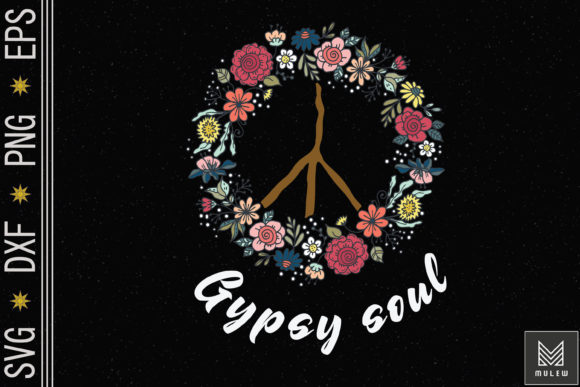
As someone who’s stitched hundreds of custom pieces—from boutique aprons to Etsy baby onesies—I opened the Gypsy Soul embroidery file with quiet curiosity, not hype. This isn’t just another floral peace motif tossed into the digital marketplace. It’s a mood, a visual rhythm, and—critically—a design that must hold up when translated from screen to thread, fabric to finished product. So I didn’t just zoom in on the PNG. I asked: *Where would this live in real life? And what does it ask of me as a designer before I commit needle, stabilizer, and client trust?*
First Impression: Soft Rebellion, Not Just Boho Decoration
Gypsy Soul lands like a breath of wind through wildflowers—loose but intentional, detailed but never fussy. The composition balances organic curves (those swirling stems and open blossoms) with grounded symmetry (the central peace symbol anchoring the layout). It’s not overly dense, which is immediately promising for machine embroidery. No tiny, un-stitchable petals or micro-lettering that’ll vanish under satin stitch. Instead, you get generous negative space, clear silhouette flow, and a gentle hierarchy: the peace sign draws the eye first, then the florals invite closer looking. That matters—especially when embroidering on curved surfaces like caps or tapered tote bag seams.
A Real Project Test: The Boutique Tote Bag Launch
Last week, I prepped a small batch of linen-cotton blend tote bags for a local herbal apothecary’s holiday pop-up. Their brand voice is earthy, mindful, quietly bold—exactly the territory Gypsy Soul occupies. I placed the design centered on the front panel, sized at 4.2 inches wide. On-screen, it looked balanced. But the real test came during hooping: the outermost vine tendrils landed right at the edge of my 5x7 hoop. Not a dealbreaker—but a reminder to always check placement against your actual hoop size *before* stitching. I used medium-weight cutaway stabilizer (essential for that linen texture), and ran a quick test on scrap. The fill stitches settled cleanly, the satin-stitched peace symbol held crisp edges, and the running-stitch vines kept their airy rhythm—no puckering, no thread breaks.
Where Gypsy Soul Shines—and Where It Asks for Thoughtful Handling
This design excels in projects where authenticity and handmade warmth matter most:
- Custom apparel: Works beautifully on relaxed-fit sweatshirts and cotton tees—especially light heathers or oatmeals where the floral softness reads clearly.
- Baby embroidery: Its open layout avoids heavy fill areas, making it ideal for delicate onesies and burp cloths (just confirm thread safety if gifting).
- Patches & aprons: Clean lines translate well to embroidered patches; the shape holds integrity even at 3-inch scale.
- Holiday & wedding gifts: Feels personal without being cutesy—perfect for a handmade tea towel set or pillow cover given to a friend embracing slow living.
- Etsy & small shop products: Stands out in mockups because it doesn’t compete with background noise—it invites pause.
But let’s be direct: Gypsy Soul isn’t plug-and-play for every surface. Avoid it on ultra-thin knits without extra stabilization—the vines may distort. Skip dark fabrics unless you’re willing to test thread contrast thoroughly (a pale yellow stem on navy needs careful color selection). And while it adapts well to curved caps, keep it centered and scaled down—those outer curves lose definition near the bill seam. Also, don’t force it into tiny hoops (<4 inches); the peace symbol loses its grounding presence, and the vines feel cramped rather than flowing.
Design Integrity Meets Customer Trust
What makes Gypsy Soul more than decorative is how it supports your credibility as a maker. When a customer orders a personalized gift—say, a “Gypsy Soul”-embroidered kitchen towel for a friend’s birthday—they’re buying intention, not just ink or thread. This design delivers that. It feels considered, not algorithm-generated. The balance between detail and restraint says, *I paid attention*. That builds trust—especially for Etsy sellers or craft fair shoppers comparing dozens of “peace flower” listings. It also elevates perceived value: a simple tote with Gypsy Soul stitched cleanly reads as a curated item, not a generic craft supply.
Practical Designer Notes Before You Stitch
Before using Gypsy Soul on client work or inventory:
- Test on scrap fabric *with your exact stabilizer and thread choices*—not just the same fiber type, but the same weight and drape.
- Check stitch density visually: zoom in on the PNG and SVG to spot any overlapping paths or unintentional double-stitching in tight corners.
- Review licensing carefully—this is a Graphics file intended for Crafts use, but commercial embroidery rights (e.g., selling stitched patches wholesale) may require separate confirmation.
- Mock it up in black and white first: does the peace symbol still read clearly? Do the vines retain rhythm without color cues?
- Compare how it looks on light vs. dark backgrounds—some floral elements rely on subtle tonal shifts that fade on black fabric.
- If adapting for applique, note that the design’s openness lends itself well to fabric layering—but avoid tiny raw-edge petals unless you’re confident in your turn-under technique.
Finally, remember this: Gypsy Soul isn’t a standalone hero. It’s a collaborator. It works best when paired with thoughtful material choices (linen, brushed cotton, midweight denim), honest stitching, and the kind of quiet confidence that comes from knowing your design serves both hand and heart.
It won’t shout. But when stitched well, it lingers—on a tote, a pillow, a baby blanket—like a quiet promise of peace, rooted in real craft.