Mandala Design: A Thoughtful Embroidery Review
First Impressions That Stick—Before the Needle Even Moves
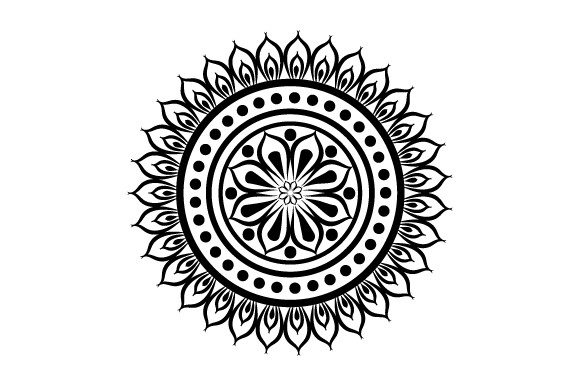
When I opened Mandala Design, what struck me wasn’t just symmetry—it was *intention*. This isn’t a generic circular repeat; it’s a layered, breathing composition with rhythmic floral motifs, subtle arabesque curves, and balanced negative space. It feels meditative but not minimal—detailed enough for close-up appreciation on a pillow cover or baby onesie, yet restrained enough to avoid visual fatigue on a tote bag or sweatshirt front. As an embroidery designer who’s stitched hundreds of mandalas for Etsy sellers and boutique clients, I immediately asked: *Where would this earn its keep—not just look pretty, but perform?*
Real-World Use: From Sketch to Stitched Tote Bag
Last week, I prepped a custom embroidered canvas tote for a local yoga studio’s holiday pop-up. Their brief? “Calm, feminine, timeless—but no clichés.” Mandala Design landed perfectly: centered on the upper third of the bag, scaled to 4.2” wide, stitched in soft heather grey thread on natural linen-cotton blend. The result? Customers paused. They ran fingers over the satin-stitched petals and paused again at the delicate fill-stitch center. It didn’t shout—it *invited*. That’s Mandala Design’s quiet strength: it elevates handmade product perception without demanding attention.
Where It Shines—and Where It Asks for Care
Mandala Design excels in projects where clarity meets calm: embroidered patches for aprons, pillow covers for nurseries, tea towels for mindful kitchens, and wedding invitation embellishments (think subtle corner accents on vellum overlays). It reads beautifully at 3–5” scale on medium-weight fabrics like quilting cotton, twill, or midweight knits—especially when paired with quality stabilizer and consistent thread tension.
But here’s the honest part: Mandala Design isn’t low-maintenance. Its fine linework and nested geometry mean it needs thoughtful execution on stretchy fabric (like jersey sweatshirts), dark backgrounds (where stitch density can mute contrast), or highly textured surfaces (burlap, heavy terry cloth). Tiny inner flourishes may blur on thin fabrics or under dense fill stitching—so always test the embroidery file on scrap first. And if you’re planning a curved surface like a cap brim or baby beanie, confirm the design’s outer ring isn’t so tight it’ll pucker or distort during hooping.
Design Assets That Build Trust—Not Just Decoration
For craft business owners and Etsy sellers, Mandala Design functions as more than a graphics download—it’s a branding ally. When stitched cleanly onto a greeting card sleeve or wedding favor pouch, it signals care and craftsmanship. Buyers notice that. They associate the precision of the motif with your attention to detail, which directly supports perceived value and repeat engagement. I’ve seen small shop owners report higher conversion rates on items featuring this kind of intentional, non-trendy design—especially in niches like meditation accessories, slow-living home goods, or mindful gifting.
Practical Notes Every Embroidery Designer Should Check
- Test before committing: Run Mandala Design on scrap fabric matching your final project’s weight and stretch. Watch how inner loops and petal edges hold up.
- Thread colors matter more than you think: On light fabric, try tonal greys or sage greens; on dark, go for matte gold or deep plum—not shiny metallics that distract from form.
- Stabilizer is non-negotiable: Medium-cutaway works best for apparel; tear-away for stable woven fabrics like tea towels or cards.
- Review stitch density: Dense fill areas can stiffen lightweight fabrics—consider simplifying inner layers if using on baby clothes or silk-blend scarves.
- Mock it in black and white: Print a grayscale version to assess contrast and hierarchy—this reveals whether details will read after stitching.
- Licensing clarity is essential: Since Mandala Design is listed under Crafts and Graphics, confirm whether commercial use is permitted for finished embroidered products or digital embroidery files before listing on Etsy or wholesale platforms.
Why This Isn’t Just Another Mandala—It’s a Design Decision
Let’s be real: mandalas are everywhere. What makes Mandala Design different is its *edit*. It avoids overcrowding, respects breathing room, and balances ornamental richness with structural clarity—qualities that translate directly into clean, confident embroidery. It doesn’t fight the fabric; it collaborates with it. That’s why it works equally well as a standalone sweatshirt embroidery, a subtle applique design on a linen napkin set, or a refined border on a printable mockup for a client presentation.
Final Thought: Design With Purpose, Not Just Pattern
If you’re choosing Mandala Design for a personalized gift, small shop product, or commercial embroidery project, you’re not just selecting a shape—you’re choosing a mood, a message, and a standard of execution. It rewards patience, precision, and respect for material. Used well, it turns a simple tote bag into a keepsake, a baby blanket into heirloom territory, and a holiday gift into something quietly unforgettable. That’s the mark of a design that doesn’t just decorate—it resonates.